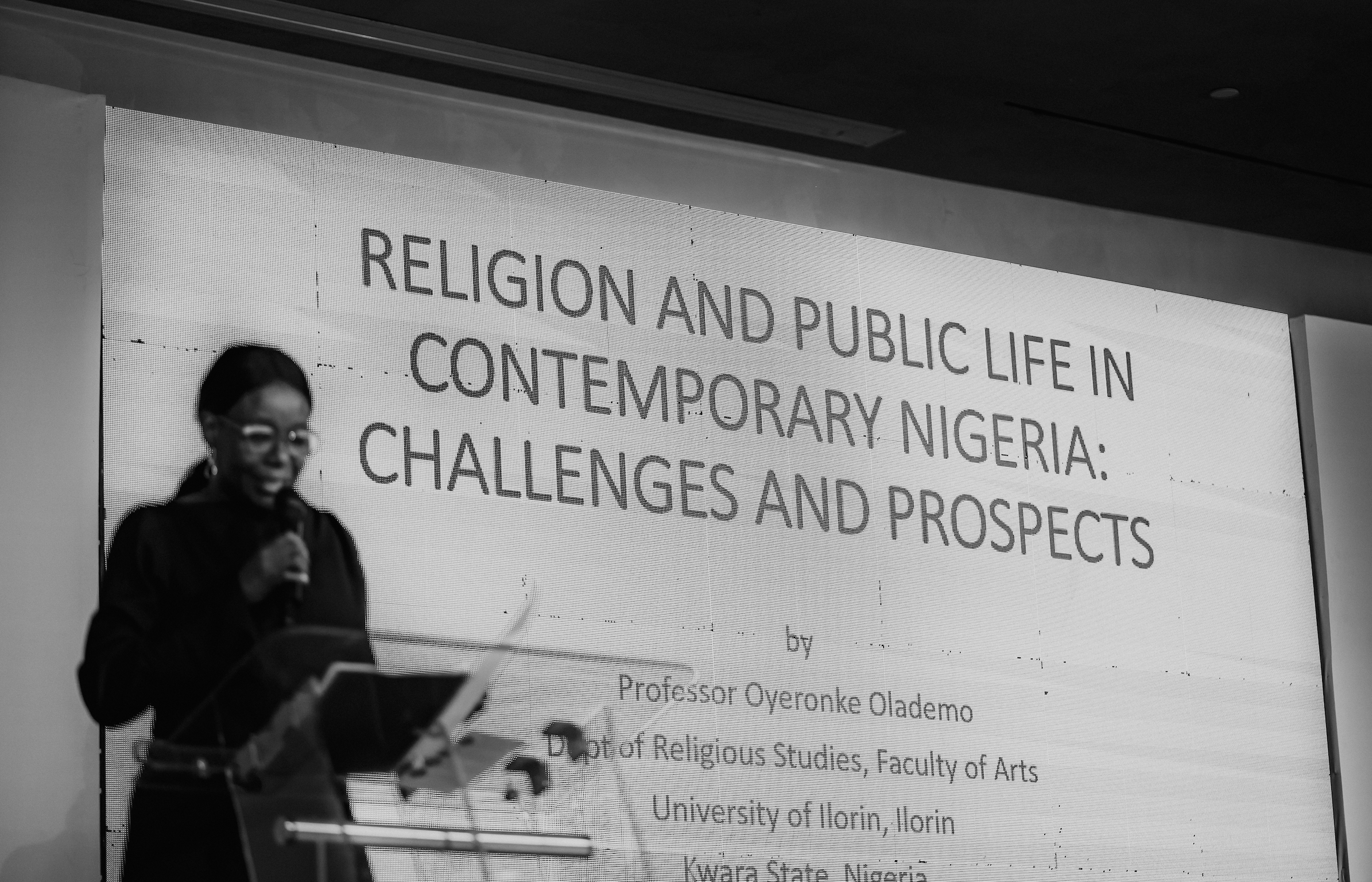
Yoruba Studies and Technology: Prospects and Challenges (Folorunso Alakija Religion and Public Life Distinguished Lecture - August 2025)

Publication information:
Abstract
Thesis
The impact of technology on Yoruba studies is best described as a double-edged sword, offering both remarkable opportunities and significant challenges. On one hand, technology—particularly digital communication and information technologies—has expanded the global reach of Yoruba language, culture, and religion. Online archives, streaming platforms, and digital classrooms enable Yoruba heritage to circulate far beyond Nigeria’s borders, creating opportunities for intercultural dialogue and identity preservation in the diaspora (Adetomiwa et al, 2020). On the other hand, the same technologies have introduced forces that undermine cultural values, often through the dominance of global popular culture, algorithm-driven representations, and the commodification of Yoruba symbols without adequate contextual grounding (Fagbolu et al, 2015). The tension between these two dynamics frames Yoruba studies today as a site of negotiation between preservation and transformation.
This lecture therefore seeks to interrogate the influence of technology on three interconnected areas of Yoruba studies in Nigeria: Language, Culture/Religion, and Drama/Films. Language is the foundation of cultural identity. As Bourdieu (1991) argues, language functions as a form of “cultural capital,” shaping access to social, economic, and symbolic power. Religion and culture are intertwined and integral to Yoruba life and studies consistently showing tremendous influences such as Ifa, Orisa worship, and paradigms for social and political structures. Technology amplifies these traditions, allowing Yoruba religious practices to be represented and contested on social media, in online rituals, and in global forums. Finally, Yoruba drama and films—particularly Nollywood productions—provide a reliable index of social change, reflecting how Yoruba people negotiate modernity and tradition. The digitization of film distribution has brought Yoruba cinema to global audiences, but it has also subjected it to the homogenizing pressures of global popular culture (Barber, 2018).
While a comprehensive account of these issues would require volumes, this paper highlights demonstrative examples in each area. The goal is to outline both the prospects and challenges of technology for Yoruba studies and to propose creative management strategies that preserve cultural authenticity while ensuring continuous relevance to Nigeria’s national development.
Full text
Full Lecture Paper (Attached below)