

Improving Livelihoods for Smallholder Coffee Farmers in Ethiopia
Student Research Spotlight: Katie Chen and Vaibhav Parik
The Harvard Center for African Studies offers funding to Harvard graduate students traveling to Africa for thesis or dissertation research or for fieldwork connected to an academic project. At the end of their CAS-sponsored travels, students must submit a written report detailing their research experience, including some of the challenges and highlights from their time in Africa. We are excited to showcase the great work our grant recipients are doing by sharing some of their reports. Below is the written report from HKS students, Katie Chen and Vaibhav Parik, who travelled to Ethiopia for their research project in Spring 2025.

Improving Livelihoods for Smallholder Coffee Farmers in Ethiopia
From the cafes of Addis Ababa to the roadside lunch spots in Bensa, coffee - or buna, as it is locally known - is more than just a drink; it’s a vibrant part of local culture. Ethiopia is the birthplace of coffee, and today, coffee remains one of the country’s most significant exports. Yet, for the 15 million smallholder farmers who produce over 95% of Ethiopia’s coffee, their earnings are very low.
Despite increasing global demand and higher export revenues, Ethiopian coffee farmers often earn just a fraction of the final sale price. Compared to other major coffee-producing countries, Ethiopian farmers receive one of the smallest shares of the export price, with their incomes constrained by a complex value chain, poor market access, and liquidity challenges.
Why This Research
As graduate students in international development at the Harvard Kennedy School, we took on this research as part of our Second-Year Policy Analysis (SYPA). Our goal was simple: we wanted to understand why coffee farmers in Ethiopia are earning so little compared to international benchmarks and what policy solutions could help them capture more value.
Having conducted preliminary analysis on the underlying drivers of the issue, we intended to visit Ethiopia to get greater insights from the ground and understand the challenges farmers face more acutely. Thanks to funding from the Harvard Center for African Studies, we spent two weeks in Ethiopia in January 2025, speaking to 60 coffee farmers and 10 different entities across the coffee sector, including coffee exporters, the Ethiopian Coffee and Tea Authority (ECTA), the Ethiopian Commodity Exchange (ECX), farmer cooperatives, and various NGOs.
Understanding the Coffee Value Chain
We started our fieldwork in Addis Ababa, where we mapped Ethiopia’s coffee value chain and identify key bottlenecks. After speaking to key industry stakeholders, we found three main stages in the coffee value chain, each with many players:
- Production: Smallholder farmers cultivate and harvest coffee cherries, often with little ability to process them any further.
- Processing and trading: Local traders (akrabis) buy fresh cherries and handle processing. However, they, too, are highly fragmented and lack financial security. These local akrabis then sell the processed green beans to wholesale traders and/or directly to roasters.
- Export or domestic sale: This stage holds the most market power – particularly the exporters – and often dictates the price that gets paid to other actors.
- Roasting and consumption: Green coffee beans are roasted for consumption either in global markets or domestically.
Despite large-scale reforms in 2017 that encouraged more direct linkages between exporters, village traders and farmers, many problems remain. Payments are often delayed since actors are short on liquidity, and farmers have limited bargaining power on prices, due to high fragmentation. These issues prevent farmers from reaping the benefits of Ethiopia’s rising coffee revenues.
What we Learned from the Farmers
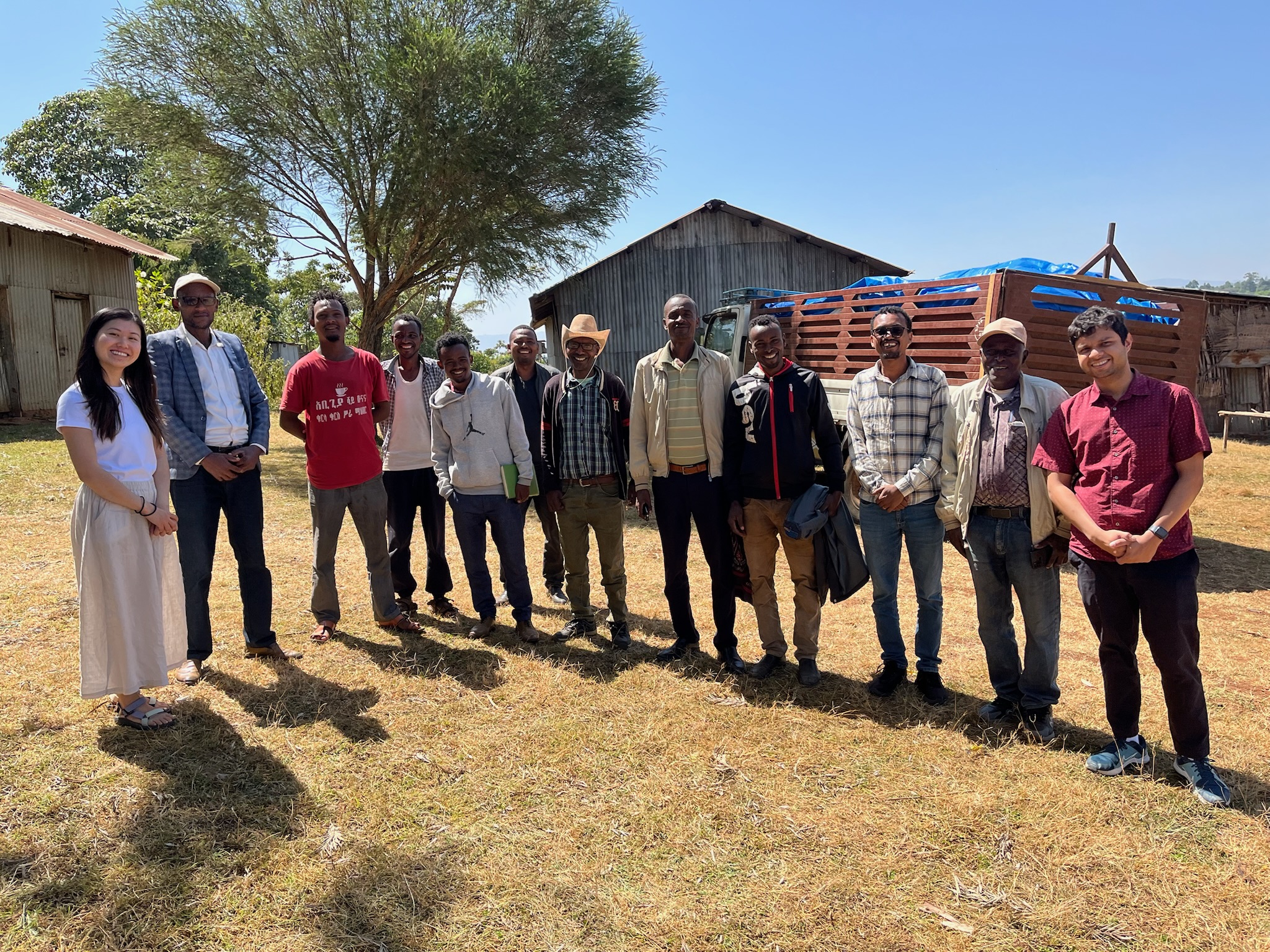
Our findings became more apparent when we visited Bensa Daye in Sidama – one of Ethiopia’s key coffee-growing regions. Key concerns that emerged from our focus groups with farmers include:
- Farmers only sell fresh red cherries, meaning they don’t benefit from further value addition, such as processing beans into parchment or green coffee.
- They operate almost entirely in cash, with low access to credit, bank accounts, or working capital to invest in storage, processing, or market timing.
- Liquidity shortages ripple across the value chain, affecting not just farmers but also akrabis and processors. Delays in payment by downstream players (e.g., exporters) to middlemen then further delay payments to producers, creating a domino effect in liquidity. Farmers often have no choice but to sell immediately at low prices to access cash, reinforcing the cycle of limited earnings.
What Can Be Done
Our research led us to three key recommendations to improve farmer earnings:
- Farmers should be able to retain control of their coffee for longer, which can be possible by creating a processing-as-a-service ecosystem. Instead of selling cherries immediately, farmers can retain ownership and process their produce under a pay-for-usage structure, which can increase the earnings they get from sales.
- Farmers need better liquidity, not just bank accounts. We should encourage partnerships between financial institutions and donors to address the lack of working capital for the coffee value chain.
- Value chain players like exporters can also act as sources of financing, by providing working capital credit to farmers. This will ensure liquidity for farmers before they harvest and sell, so that they do not have to make decisions under duress.
Overall, we recognize that while the Ethiopian coffee sector is complex, and there is no single fix. However, addressing some of these challenges related to finance and market structure may prove helpful in ensuring that the sustained growth of Ethiopia’s coffee sector translates into better incomes for the farmers who make it all possible.